12 Ways to Build a Strong Contemporary Sculpture Portfolio for Exhibitions and Academia
Building a contemporary sculpture portfolio is not the same as collecting images of finished works. For exhibitions, juried calls, residencies, grants, and academic evaluation, your portfolio is a research document, a visual argument, and a professional archive. It needs to communicate intention, craft, experimentation, and relevance. It also needs to be readable quickly by curators and committees, while still being deep enough to support long conversations about your practice.
For sculptors working between studio practice and academia, including many artists connected to applied arts, design thinking, and contemporary exhibition formats, a strong portfolio must show more than style. It should show method, process, critical context, and the ability to develop projects over time. It should also make your work easy to install, understand, and collect, which matters to institutions as much as it matters to galleries.
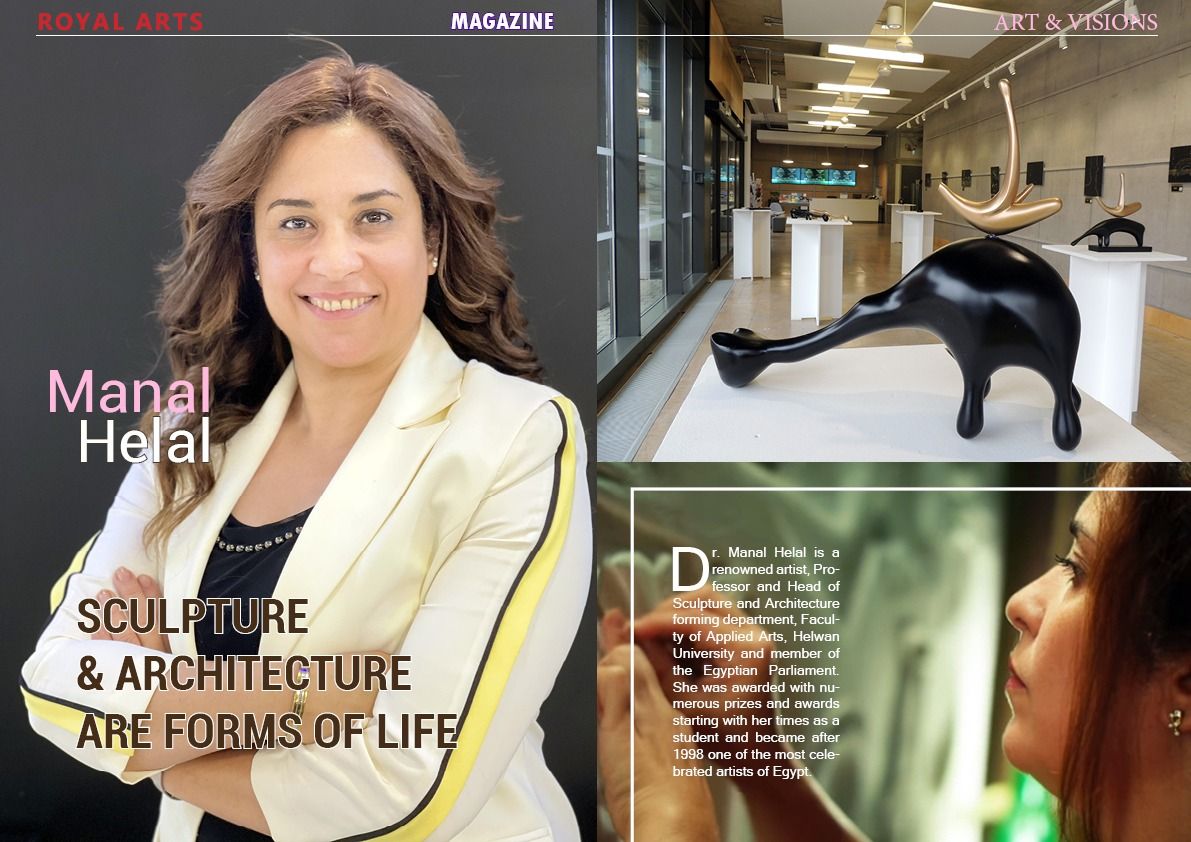
This article presents 12 practical ways to build a strong contemporary sculpture portfolio for exhibitions and academia. Each point is written as a set of actions you can implement immediately, whether you are preparing for a solo show, applying for an academic position, building a graduate application, or updating your professional site such as Manal Helal.
1. Define your portfolio purpose, then build versions for each audience
A portfolio that works for a museum submission is not always the same portfolio that works for academic promotion or a graduate application. Many sculptors lose opportunities because they submit one generic PDF that does not match the call. Start by writing down the specific decisions a reviewer must make, then build a version that answers those decisions.
- Exhibitions: prioritize a cohesive body of work, strong installation views, clear dimensions, and a short statement that communicates the conceptual framework quickly.
- Academia: include evidence of research, pedagogy, scholarly activity, workshops, student outcomes, community impact, and sustained development across years.
- Grants and residencies: emphasize process, experimentation, feasibility, and a clear proposal-to-outcome pathway.
- Collectors and commissions: highlight craftsmanship, material stability, production planning, and past successful installations or public works.
Practical approach, build a core master portfolio, then generate smaller tailored exports. Your master archive can be large, but every submission should feel curated.
2. Curate like a curator, edit ruthlessly and build a clear narrative arc
Contemporary sculpture portfolios become strong through selection, not accumulation. A committee rarely has time to decode a long list of unrelated pieces. Your goal is to guide the viewer through your development and concerns. Think like a curator installing a show, what comes first, what supports it, and what ends with impact.
- Limit each submission portfolio to a focused selection, often 10 to 20 works, depending on the call.
- Open with your strongest and most recent work, unless the call asks for chronological order.
- Group works into 2 to 4 series, each with a clear research question or formal problem.
- Remove work that repeats the same solution without adding a new question.
- End with a work that signals future direction, scale, or conceptual expansion.
If you work across digital sculpture, physical sculpture, installation, and design-oriented projects, you can still create coherence. The coherence should come from your research interests, material logic, and conceptual concerns, not from using the same material every time.
3. Photograph and document with exhibition standards, not social media standards
Documentation is the bridge between your studio and the outside world. Sculpture is difficult to photograph, and weak documentation can make strong work look uncertain. Exhibition and academic reviewers evaluate your professionalism partly through your documentation quality. Prioritize accuracy, clarity, and completeness.
- Use consistent lighting and color correction so materials read accurately, especially bronze, resin, clay, wood, and mixed media surfaces.
- Include multiple views, front, back, profile, and detail, to communicate structure and craftsmanship.
- Add at least one contextual view to show scale, either in a space or with a clear reference.
- For complex works, include close-ups of joints, textures, and transitions between materials.
- Use clean backgrounds when appropriate, but also include installed images for exhibition credibility.
Build a repeatable process. A simple home setup can still be professional if it is consistent. For major works, invest in a professional shoot. Treat it as part of production, not as an afterthought.
4. Include installation views and spatial thinking, show how your work lives in space
Contemporary sculpture is often judged by its relationship to space, light, movement, and viewer circulation. A portfolio that shows only isolated objects on a neutral background can feel incomplete for exhibitions. Curators want to know how your work behaves in a room and whether you can think like an installer.
- Include wide shots that show the work in relation to walls, floor, and nearby architecture.
- Show sightlines, entry points, and how the viewer approaches the piece.
- If the work is modular, show multiple configurations, not just one.
- For installation art, include a simple map or sequence of images that shows the layout.
- Document lighting decisions, shadows, reflections, and interactive elements if relevant.
Even for digital sculpture, you can present spatial thinking through rendered installations, AR mockups, or scale models placed in photographed interiors. The key is to show that you understand presentation as part of the artwork.
5. Write artwork captions that are complete, consistent, and readable
Captions are not decorative text. They are a professional data layer that allows committees to compare your work to standards and requirements. Inconsistent captions create doubt about scale, date, medium, or authenticity. Create a consistent caption template and use it everywhere.
- Title, year.
- Medium and materials, be specific, for example, fired clay with oxides, bronze cast, resin with pigment, mixed media with found metal.
- Dimensions, specify height by width by depth, and units, usually centimeters for Egypt and international exhibitions, plus inches if needed.
- Edition information for casts or prints, for example, 1 of 5 plus artist proof.
- Location and credit line for commissioned or collected works.
Keep captions short and standardized. Put the conceptual explanation in your statement, not in every caption. When captions are consistent, reviewers focus on the work instead of decoding the information.
6. Develop strong series and research threads, show sustained inquiry
In academia, and increasingly in curatorial contexts, reviewers look for sustained inquiry. A single strong piece matters, but a strong series shows your ability to develop a research problem over time. Series do not need to look identical. They should share a question.
- Define the question each series explores, for example, body and memory, urban fragments, digital anatomy, material transformation, or craft and technology.
- Show progression, early experiments, mature solutions, and a turning point where you change method or scale.
- Balance cohesion with risk, include one or two works that challenge the series logic and open a new direction.
- Write a short series note, 80 to 150 words, that frames the inquiry without overexplaining.
For sculptors working in applied arts contexts, series can also demonstrate design research, ergonomics, public engagement, or material innovation. The key is to show that your decisions are intentional and cumulative.
7. Integrate process evidence, prototypes, maquettes, tests, and failures
Contemporary sculpture is built through testing, and committees respect artists who can show how they think. Process material is especially important for academic portfolios because it proves methodology and the ability to teach. It is also helpful for exhibitions when your work involves complex fabrication or conceptual transformation.
- Include sketches, clay studies, digital block-outs, armature experiments, and material tests.
- Show step-by-step sequences for one or two key works, from concept to final installation.
- Document decisions, why you changed scale, altered a gesture, changed material, or re-engineered stability.
- Include failures selectively, one or two examples that demonstrate problem solving and learning.
Be careful, process should support your finished work, not replace it. Curate process pages like evidence in a research presentation. Every process image should clarify intention, technique, or innovation.
8. Present digital sculpture and physical sculpture with equal seriousness and clear translation
Many contemporary sculptors move between digital modeling, 3D printing, CNC, casting, and hand finishing. A strong portfolio explains how the digital and physical sides connect. Reviewers may not share your technical background, so your presentation should make the workflow understandable without becoming a tutorial.
- For digital pieces, show renders from multiple angles, wireframes for complexity, and material studies that communicate surface intent.
- Explain output methods, such as 3D printing for maquettes, CNC milling for molds, or digital sculpting used to plan a bronze cast.
- Include at least one example where a digital model becomes a physical object, with images of intermediate stages.
- Discuss finishing, patina, sanding, assembly, and the artist hand, so the work does not feel purely technical.
When digital sculpture is presented as conceptual and material research, not just as software skill, it gains legitimacy across exhibitions and academic evaluation.
9. Build an artist statement that is specific, grounded, and aligned with your images
A strong statement is not written to sound intellectual. It is written to clarify what the viewer is seeing and why it matters now. Committees and curators often read the statement quickly, then look at the images again. If the statement does not match the work, trust decreases.
- Start with your central concern in one sentence, for example, what question you return to and what you make to explore it.
- Describe materials and methods as part of meaning, not as a list of techniques.
- Locate your work in a context, cultural, historical, social, or formal, without overclaiming.
- Keep it readable, avoid heavy jargon, and define any necessary terms through examples.
- End with your current direction, what you are investigating now, and what you want to build next.
For sculptors linked to applied arts and design, include how design thinking, teaching, or community engagement shapes your studio decisions. A statement can be brief and still feel deep if it is precise.
10. Add academic and professional evidence, exhibitions, publications, teaching, and impact
If your portfolio will be reviewed by academic committees, you must include professional evidence that supports your artistic profile. Even for exhibition submissions, a short CV can strengthen credibility. The goal is to show consistent professional activity and clear contributions.
- Selected exhibitions, juried shows, biennials, gallery exhibitions, and institutional presentations.
- Awards, grants, residencies, and notable commissions.
- Publications, catalogs, interviews, academic papers, and conference participation.
- Teaching experience, courses taught, curriculum development, workshops, and mentorship outcomes.
- Community projects, collaborations, and interdisciplinary work, especially when aligned with your research.
Keep the CV selected and relevant. A long list without focus can dilute impact. For academic contexts, you can provide a full CV separately and include a selected version inside the portfolio.
11. Design the portfolio layout for speed and clarity, then for depth
Reviewers often spend 30 to 120 seconds deciding whether to keep reading. Your layout must support fast understanding. After that, it should reward deeper viewing. A strong portfolio design is quiet. It does not compete with the work.
- Use a consistent grid and generous margins. Avoid crowded pages.
- Choose one or two readable fonts and keep sizes consistent across captions and headings.
- Keep background colors neutral so materials and shadows read correctly.
- Use section breaks, for example, Series 1, Series 2, Process, Installation, Selected CV.
- Export in a committee-friendly format, usually PDF, with reasonable file size, often 10 to 25 MB unless specified otherwise.
Sequence matters. Place an image on the first page that represents your strongest work and your identity as an artist. Make navigation effortless, with clear titles and predictable structure.
12. Maintain a living archive and update cycle, portfolio building is a studio practice
A portfolio is never finished. If you only update your portfolio when there is a deadline, quality suffers and important documentation gets lost. Treat your portfolio like studio maintenance. Build a system that captures works as you produce them and makes future submissions easy.
- Create a folder structure by year, series, and work title, with separate folders for final selects and raw documentation.
- Save caption data in a spreadsheet, title, year, medium, dimensions, edition, notes on installation.
- After every exhibition, archive installation views, press text, and a short reflection on what you learned.
- Schedule quarterly updates to your website and portfolio PDF, even if changes are small.
- Back up everything in two places, for example, an external drive and a trusted cloud service.
When your archive is strong, your portfolio becomes easy to tailor for exhibitions and academic opportunities. It also supports long-term legacy, which matters for artists building serious institutional presence.
Putting the 12 ways into action, a practical checklist you can follow this month
To make this article useful beyond inspiration, here is a simple action plan. You can complete it in two to four weeks depending on how much documentation you already have.
- Week 1: define your audiences, write a one-paragraph purpose for each, then select 12 to 20 works total for a master set.
- Week 2: photograph or re-photograph priority works, focusing on multiple views, accurate color, and at least one installation view per series.
- Week 3: finalize captions, write one artist statement and 2 to 4 short series notes, then curate 10 to 15 process images as supporting evidence.
- Week 4: design the PDF layout, export two versions, one for exhibitions and one for academia, then update your website with the same structure.
Final note: A strong contemporary sculpture portfolio makes your work legible without reducing it. It communicates confidence, clarity, and seriousness. Whether you are preparing for an exhibition, academic review, or an international call, these 12 ways help you present your practice as research, craft, and contemporary cultural contribution, the qualities that define a durable artistic career.